How We Work:
The Ottawa Model of Collaborative Research
Decolonizing Settler States successfully brought together the core leadership team and partners, developing shared understanding, building trust across academic–practitioner divides, developing The Ottawa Model of Collaborative Research, and establishing relationships with Indigenous Peoples in multiple regions.
The Ottawa Model structures relationships between academics and practitioners through joint symposia, distinct follow-up work by each sector, periodic touchpoints, dual outputs, and mutually supportive dissemination. The Ottawa Model’s structured approach to collaboration ensures that research produces scholarly contributions and practical tools, and also creates sustained relationships that outlast individual projects. Annual symposia held by partner academic institutions on a rotating basis will facilitate the expansion of the Ottawa Model and focus on emergent themes determined by the Partnership, bridging the gap between academic research and Indigenous rights practice.
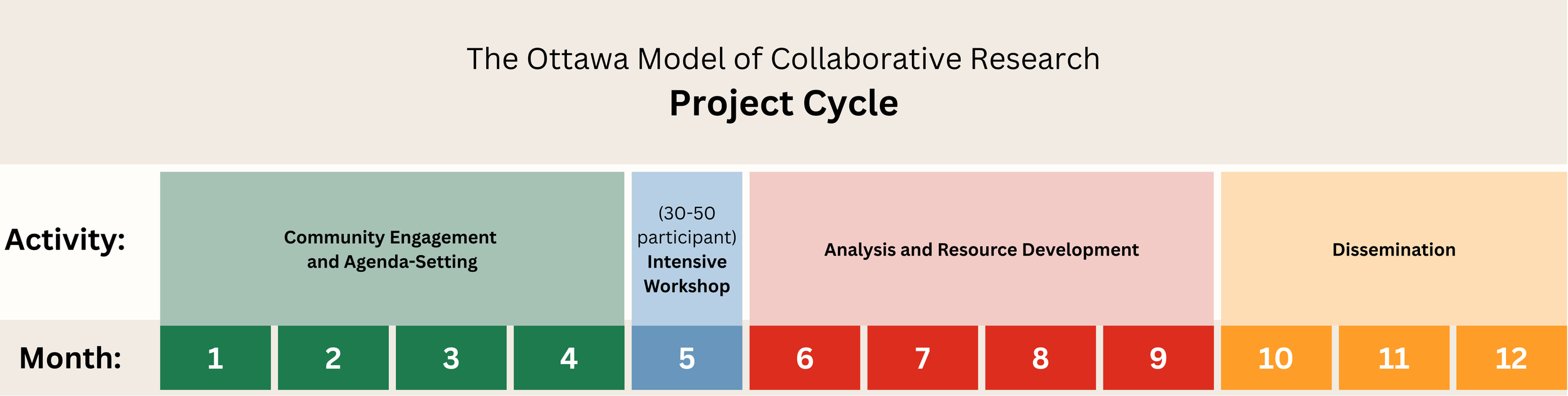
Each project cycle consists of community engagement (Months 1–4), intensive workshop (Month 5: 3–5 days, 30–50 participants — community members, Legal Circle and Policy Circle experts, practitioners, policymakers), analysis and resource development (Months 6–9), and dissemination (Months 10–12). Projects will address community-identified challenges like Indigenous language education implementation, child welfare transformation, consultation protocols, Jordan’s Principle implementation, health governance, and resource co-management.